Or how the same countries sewing our clothes end up drowning in them
There’s a strange kind of poetry to it.
This article may sound cheese or "We've heard this million times before", or "Yeah, yeah, what's new?"... I don't care, I'm still going to write about it.
A kid in Dhaka sits behind a sewing machine, stitching the same seam over and over. A dress, a shirt, a jacket—whatever the West has decided is trending this month. It’s hot, the lights flicker, the air smells like synthetic dye. But the needle doesn’t stop. Because the deadline is next week and the order is huge.
That piece of clothing travels thousands of kilometers to land in a store with clean floors, bright lights, and chill music. It’s cheap. Cute. “Wear it with boots and a blazer,” says the display. Someone buys it, wears it twice, maybe three times. Then tosses it in the “donation” pile, or worse, straight in the bin.
A few months later, that same shirt—faded, maybe stained, maybe still with its tag on—ends up dumped in the outskirts of Accra. Or Nairobi. Or New Delhi. Not folded neatly on a shelf, but baled, broken, dumped. Piled on top of other clothes that didn’t survive the cycle.
From child labor to landfill—in a perfect loop.
It’s called fast fashion. But it’s not fast. It’s stuck. It just spins.
We like to believe fashion is harmless. A little fun, a little flair. “Express yourself.” “Treat yourself.” But fast fashion isn’t really about self-expression anymore. It’s about self-erasure. It teaches us that who we are is never quite enough—that last week’s identity is already outdated. That every trend is a ticket to belonging, and every outfit a performance that expires by Friday.
And in the background, whole systems are grinding people and places into the ground to keep it moving.
Let’s not pretend we don’t know this. We know.
We know most fast fashion is made in countries with low labor costs, poor protections, and zero unions. We know garment workers—mostly women, often children—work in unsafe factories for wages that don’t cover food, let alone education or rent. We’ve seen the headlines: Rana Plaza, factory fires, floods of discarded clothing. We know.
But somehow, knowing hasn’t stopped the machine.
Because the machine isn’t powered by ignorance.
It’s powered by convenience.
And guilt doesn’t compete well with 70% off.
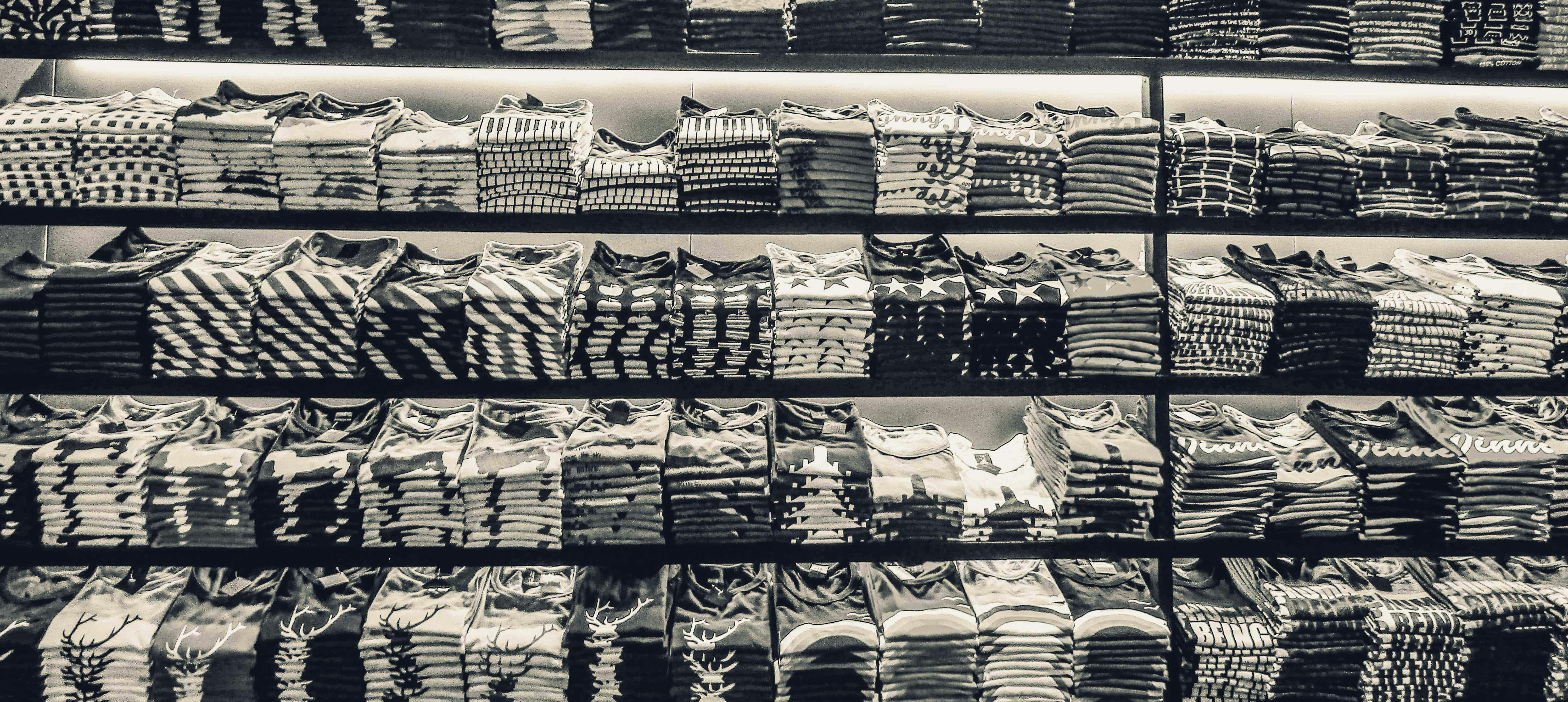
From Production to Disposal—It’s All Built on Extraction
Fast fashion works like this: squeeze labor costs until they bleed, produce at speed, flood the market with newness, sell the illusion of affordability, and once it falls apart? Toss it. Blame the consumer.
Repeat.
But the final stage of the cycle is the one that gets the least attention. The part where the West exports its textile waste—literally ships it off—under the pretense of “donation.” Millions of tons of clothing leave Europe and North America each year, headed to places like Ghana, Kenya, India, Chile.
Some of it is resold. Some is reused.
But a lot of it? It’s garbage.
Unwearable. Torn. Poor quality.
Too broken even for secondhand markets.
So it ends up in rivers, beaches, deserts. Or it’s burned—choking out entire neighborhoods in smoke and synthetic stench.
This isn’t generosity. It’s offloading responsibility.
It’s waste colonialism—when the world’s richest nations ship their trash to the Global South, then look the other way.
Kantamanto. Atacama. Your Closet.
Ghana’s Kantamanto Market is one of the largest secondhand clothing hubs in the world. Every week, 15 million garments arrive. Nearly 40% of them can’t be used. They clog drains, create flooding, collapse under their own weight. The people cleaning them up—market vendors, porters, local workers—do so at a cost to their health, their environment, their dignity.
In Chile, the Atacama Desert is quietly becoming a fashion graveyard. Mountains of garments—many still with tags—lie bleached and rotting under the sun. It looks surreal in pictures. It smells like chemicals and plastic and something that shouldn’t be there.
And the worst part?
Some of the people living among the waste are the very people who made the clothes.
That’s the full-circle irony.
We extract the labor, then send back the leftovers.
The same systems that exploit also pollute.
The same hands that make also clean up.
The same communities that carry the weight of production also carry the shame of disposal.

And Still—We Call It a Bargain
A €4 T-shirt isn’t cheap. It’s subsidized by suffering.
A €19 jacket isn’t sustainable just because it has a green tag. It’s sustainable only for the company’s profits.
A €2 polyester crop top? Might cost nothing today. But someone else pays for it—with their lungs, their rivers, their future.
The industry doesn’t just sell us clothes. It sells us forgetfulness. It sells us speed.
And most of all—it sells us the feeling that it’s not our fault.
That’s how fast fashion survives: through collective amnesia.
But Cycles Can Be Broken
This isn’t about shaming people for buying what they can afford. This is about confronting the system that made those our only choices. The one that made slow, ethical, well-made clothing a luxury. The one that made excess feel normal and quality feel unreachable.
So where do we begin?
Not by being perfect. But by being awake.
By noticing the loop.
By refusing to pretend that this is just the way things are.
We can buy less. We can re-wear. We can repair. We can swap. We can love the clothes we already have. We can support brands that pay their workers and respect the earth. And we can pressure the ones that don’t.
We can talk about waste. Loudly. Visibly.
We can push for policy that bans textile dumping. For laws that hold brands accountable for their full production cycles—not just the shiny part.
And we can remember that clothes, at their best, are not disposable.
So Here We Are.
A child in Bangladesh stitches a T-shirt.
It’s sold, worn, tossed.
It travels back.
It dies in a landfill next to their home.
That’s the system.
That’s the irony.
That’s the full circle we’re caught in.
But circles don’t have to stay closed.
They can be opened.
Broken.
Rewritten.
And maybe that’s the work—bit by bit, stitch by stitch—of those of us who refuse to unsee it.